
Storytelling for Social Change: How a Refugee Filmmaker Found His Purpose
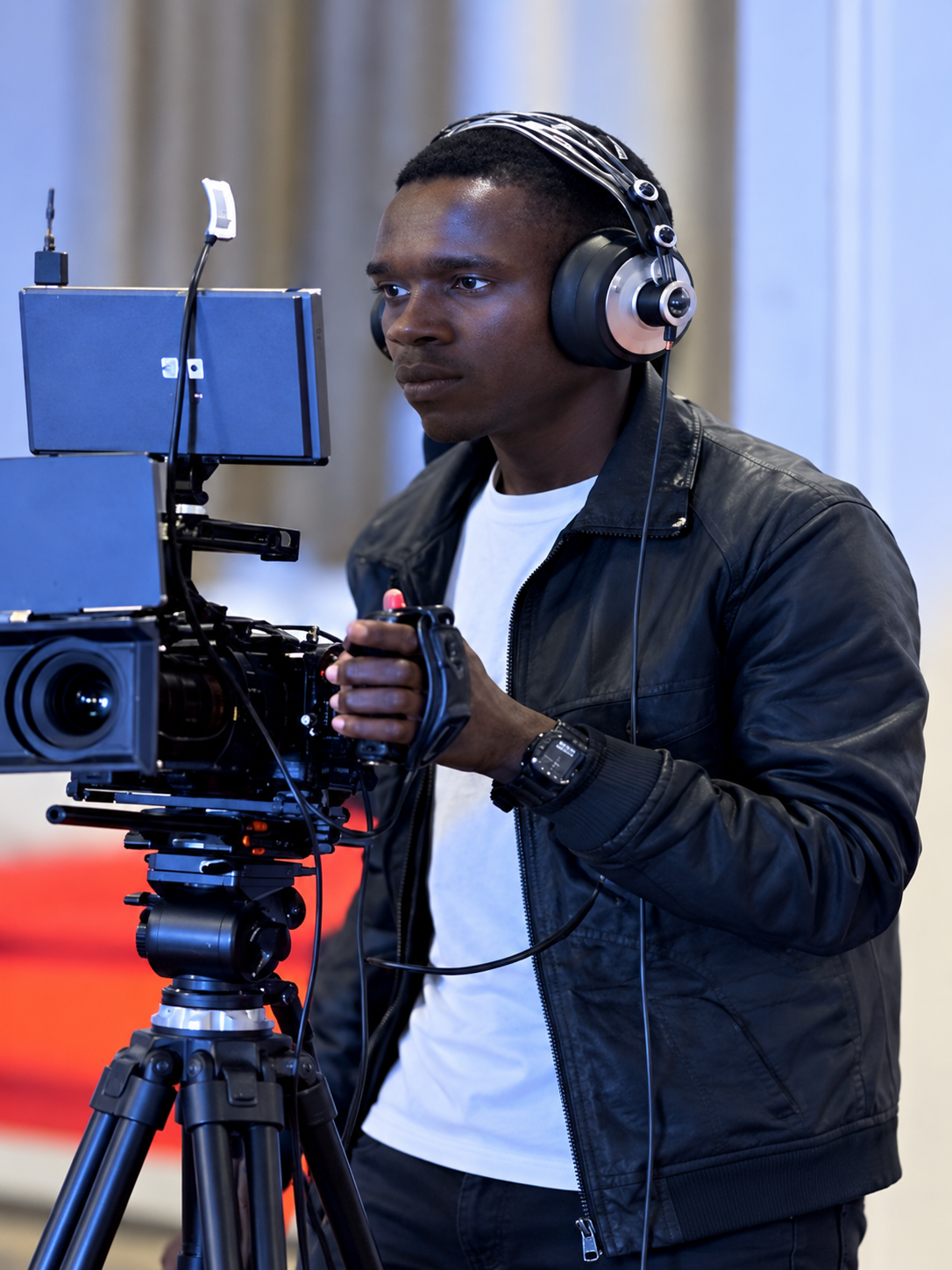
What if a meaningful future looks different from the one others expected for you?
Perhaps you understand the pull between a career that makes sense on paper and work you feel drawn to pursue. For Loruba Manasseh, that decision came with two very different possibilities: civil engineering at Makerere University or film production and directing at USIU in Nairobi.
He chose filmmaking. Today, his work offers a personal example of storytelling for social change. He's not only building a flourishing career, but also helping others develop creative skills and making room for refugee communities to tell their own stories.
However, his journey to seeing that dream fulfilled required a few detours. Before Manasseh could pursue film production, he first needed a way to continue his education.
An Opportunity to Begin Again
Manasseh had been doing well at school in Uganda when his scholarship ended at Senior Four. Without funds to continue, he returned to a refugee settlement, unsure what would come next.
“Uncertainty became my reality,” he told us, and that’s a terrifying place to be.
Then, a scholarship to the Leadership Academy of South Sudan (LASS) opened a way forward.
“I refer to it as the moment God turned my life around,” Manasseh says.
At LASS, he learned about leadership, faith, and entrepreneurship while continuing his studies. He put these lessons to use by teaming up with other alums from his refugee settlement to sell locally made shoes and roasted maize, until COVID-19 curfews forced them to stop.
“Business is risky,” he learned. “It takes resilience and momentum.”
His first business didn’t last, but his drive to build something new would shape his future career.
Choosing Work He Believed In
After Senior Six, 4africa encouraged Manasseh and his friends to look for more scholarships. He earned a Mastercard Foundation Scholarship to study film production and directing at the United States International University-Africa in Nairobi. He was also accepted to study civil engineering at Makerere University, which he calls “the safe choice.”
“I chose filmmaking,” he says, “because I believed stories have the power to change lives, even though not everyone around me was happy with my choice.”
His choice encourages us to think differently about what success means. Earning a steady income matters, but so does having the chance to develop your abilities and find purpose in how you use them.
For Manasseh, creative work offered a way to bring those aspirations together. His path would involve cameras, directing, and stories worth sharing.
Storytelling for Social Change Starts with Listening
When Manasseh returned to the settlement after his first year, he found friends leaving school and girls entering early marriages. Seeing the barriers facing people he knew prompted a question:
“How can I become the opportunity someone else is waiting for?”
He started with My Scholarship Opportunity, a project that showed how hard it was to find scholarship information. So many refugees and young people had talent and ambition, but often lacked access to the right information.
This experience inspired him to start RiseUp SkillUp Foundation (RUSU), a community group that supports refugee youth.
“True leadership,” Manasseh says, “is not only about creating opportunities. It is about removing the barriers that keep people from accessing them.”
Today, RUSU teaches refugee youth and young mothers skills like filmmaking, photography, podcasting, peace-building, and media production. Participants can develop skills and tell their own stories, on their own terms. (Help grow the organization’s support base by following them on LinkedIn.)
That ownership matters. Storytelling can bring attention to difficult circumstances while making space for the interests, abilities, and ambitions of the people experiencing them. Learning to use a camera or microphone creates another way to participate in those conversations.
Creative Entrepreneurship: Leadership Behind the Camera
Manasseh also founded Heartsky Pictures Limited in Uganda and Empower Studios Africa in Kenya. His companies produce documentaries, commercials, and social-impact stories while employing and mentoring young creatives.
This is creative entrepreneurship in practice: using artistic skills to provide services, grow a business, and open doors for others. It also reminds us that leadership can take many forms. Whether it’s leading a project, mentoring a young photographer, or helping someone shape a story, each role carries responsibility and influence.
“This,” Manasseh says, “is how opportunity multiplies.”
His career is about more than making a living—it’s also about helping others reach their potential. Working behind the camera has become his way to lead by example.
Supporting a Future with Room for Purpose
If you’re thinking about how to give back, Manasseh’s story shows why it’s worth supporting education and mentorship that help people use their unique talents.
A scholarship allowed him to keep studying. More education, his own choices, and support from others helped him build the creative career he dreamed of. Now, he’s extending opportunities to people who face challenges he knows well.
“Our responsibility,” he says, “is not simply to succeed. It is to multiply the opportunities we have received.”
By supporting 4africa, you can help young leaders learn and grow as they find ways to serve their communities. Their futures could look very different from one another. Manasseh’s story shows that one path can start behind a camera, with a story that matters.